DIN products

Because not all standards are equal!

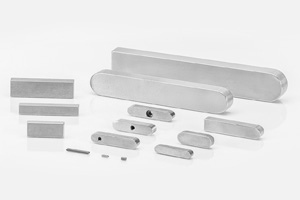
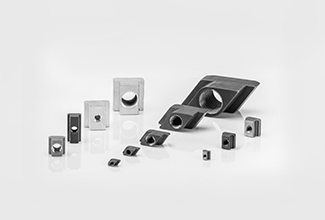
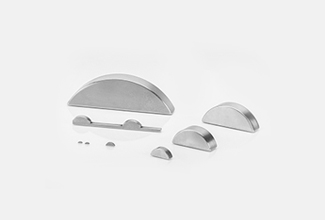
Our DIN product portfolio includes parallel keys and Woodruff keys as well as T-slot nuts, which are used in power transmission and fastening technology. Select your required DIN component in our nosta digital product catalogue and download the 3D data in all common formats. You will also find application-specific standard solutions in the area of T-slot nuts and C-rails under nosta Standard.

Parallel keys

T-slot nuts

Woodruff keys

Sent RfQ to Theresa

All DIN products

Product Materials Width (in mm) Height (in mm) Length (in mm) Thread Version

Woodruff key

Item number: 880001,001,4

Technical drawings

Steel (1.0503) 1 1,4 4

Woodruff key

Item number: 880001,502,6

Technical drawings

Steel (1.0503) 1,5 2,6 7

Parallel key

Item number: 100-004-452.01-00

Technical drawings

Steel (1.0503) 2 2 6 Type AB, one round, one straight end

Parallel key

Item number: 100-002-147.01-00

Technical drawings

Steel (1.0503) 2 2 6 Type A, two round ends

Parallel key

Item number: 8500B0202006

Technical drawings

Steel (1.0503) 2 2 6 Type B, two straight ends

Parallel key

Item number: 8500Z0202008

Technical drawings

Steel (1.0503) 2 2 8 Type AB, one round, one straight end

Parallel key

Item number: 100-002-149.01-00

Technical drawings

Steel (1.0503) 2 2 8 Type A, two round ends

Parallel key

Item number: 100-003-736.01-00

Technical drawings

Steel (1.0503) 2 2 8 Type B, two straight ends

Parallel key

Item number: 100-004-453.01-00

Technical drawings

Steel (1.0503) 2 2 10 Type AB, one round, one straight end

Parallel key

Item number: 100-002-151.01-00

Technical drawings

Steel (1.0503) 2 2 10 Type A, two round ends
Show more

FAQs about our DIN products

Can I order using a DIN number?

Yes, we will confirm our item number for you, quoting the DIN numbers. You will then find the corresponding DIN number in the item description.
Nosta product catalogue

What is a DIN standard?

DIN stands for Deutsches Institut für Normung (German Institute for Standardization). This institute sets standards, e.g., how large a particular component must be, what material is used, or how something is tested.
The advantage:
– Manufacturers and customers speak the same language—everyone knows exactly what is meant.
– Parts from different manufacturers fit together.
– Quality and safety remain consistently high.
– DIN parts are tried and tested parts, some of which are mass-produced and therefore process-reliable.
In short:
A DIN standard ensures that products are comparable, compatible, and reliable – regardless of who manufactures them. This makes life much easier for designers.

What is an ISO standard?

An ISO standard is essentially the international equivalent of a DIN standard. ISO stands for International Organization for Standardization. Experts from many countries come together to agree on globally uniform rules—e.g., for dimensions, safety, quality, or testing procedures.
The advantage:
– The same standards apply everywhere in the world.
– Products from different countries are compatible with each other.
– Quality and safety are comparable, regardless of where something is produced.
In short:
An ISO standard is like a global set of rules that helps everyone work together better and avoid misunderstandings.

Do nosta products comply with all relevant DIN/ISO standards?

Yes! Nosta standard parts such as keyways, disc springs, T-nuts, and lugs are manufactured in accordance with DIN standards.
DIN standards often correspond to ISO standards, and if they have been adopted by the international standard (ISO), they are marked with DIN ISO.